

Introduction
Braking systems are essential in high-performance cars for safety, control, and track performance. They allow vehicles to decelerate efficiently, maintain stability, and support driver control under extreme conditions. This article explains the components, types, and operation of braking systems used in high-performance sports cars, as well as their impact on handling and safety.
Purpose of Braking Systems
Braking systems in sports cars serve several purposes:
- Slow or stop the vehicle safely
- Control weight transfer during deceleration
- Maintain vehicle stability during cornering
- Support performance driving on roads and tracks
High-performance braking is designed to withstand repeated use without degradation.
Basic Components of a Braking System
Brake Pedal
- Connects the driver to the braking system
- Transmits input force to the master cylinder
Master Cylinder
- Converts pedal force into hydraulic pressure
- Distributes pressure to brake calipers
Brake Lines
- Carry hydraulic fluid from the master cylinder to calipers
- Must withstand high pressure and heat
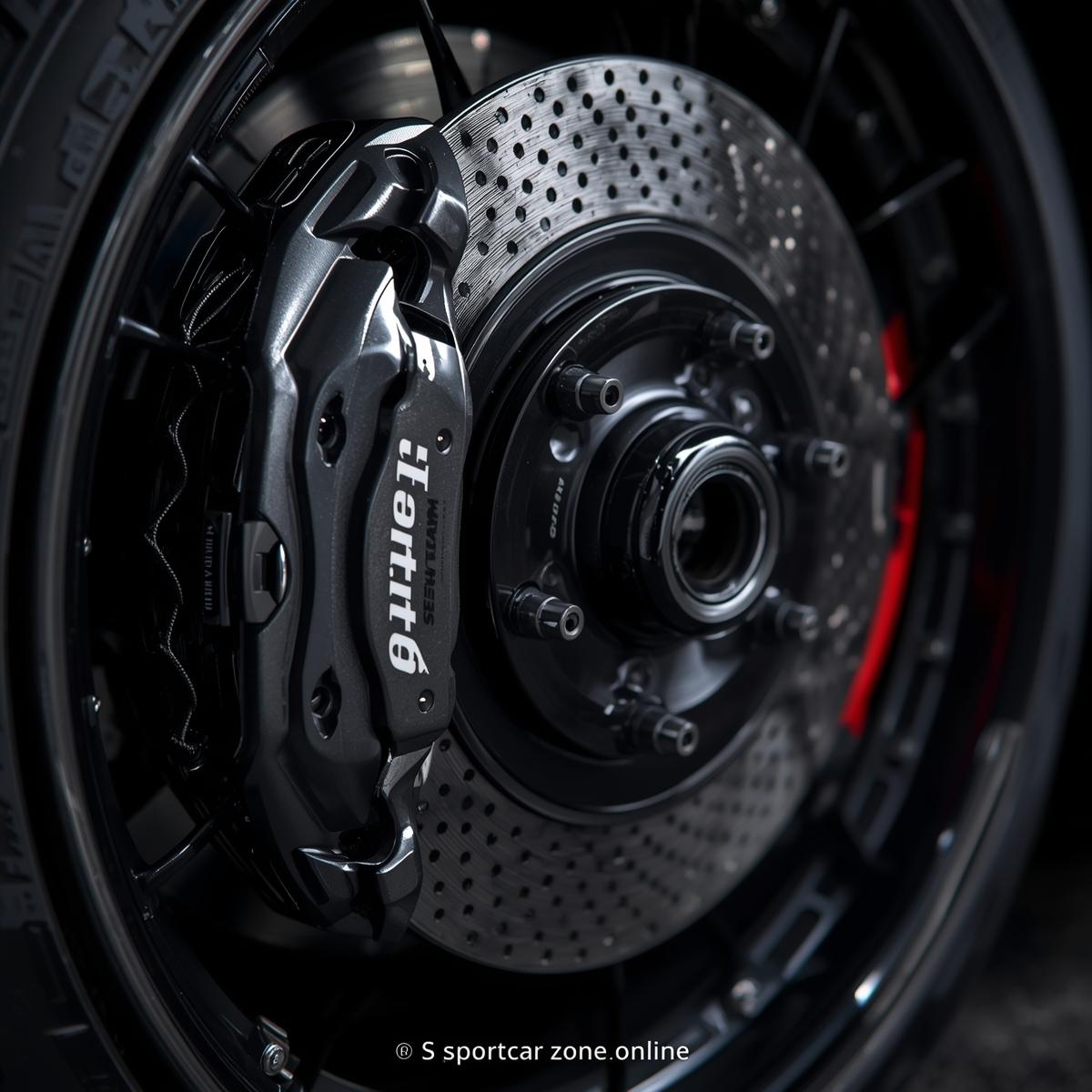
Brake Calipers
- House pistons that press brake pads against rotors
- Types: fixed and floating
- Number of pistons affects clamping force and modulation
Brake Pads
- Friction material pressed against rotors
- Wear over time and require replacement
- Material selection affects performance and longevity
Brake Rotors (Discs)
- Rotating discs attached to wheels
- Brake pads clamp onto rotors to slow rotation
- Materials: cast iron, steel, carbon-ceramic
Brake Fluid
- Transmits hydraulic pressure
- Must withstand high temperature without boiling
- Requires periodic replacement
Types of Braking Systems
Disc Brakes
- Most common in high-performance sports cars
- Brake pads press on rotors to generate friction
- Offer better heat dissipation than drum brakes
Drum Brakes
- Rare in modern sports cars
- Less effective at heat dissipation
- Still used for parking brakes in some models
Carbon-Ceramic Brakes
- Rotors made from carbon-fiber reinforced ceramic
- Lightweight and heat-resistant
- Resist fade during repeated heavy braking
- Expensive compared to steel rotors
Brake Caliper Configurations
- Fixed Calipers: Pistons on both sides, rigid mounting
- Floating/Sliding Calipers: Pistons on one side, caliper moves to clamp
- Multi-piston calipers increase braking force and modulation
High-performance sports cars often use 4- or 6-piston calipers on front and 2- or 4-piston on rear.
Brake Balance and Vehicle Dynamics
Brake balance determines how force is distributed between front and rear wheels:
- Front-heavy cars require more front brake bias
- Mid-engine cars balance front and rear braking for stability
- Adjustable brake bias allows tuning for track or street use
Proper brake balance prevents lock-up, understeer, or oversteer during braking.
Anti-lock Braking Systems (ABS)
ABS prevents wheel lock during hard braking:
- Monitors wheel speed with sensors
- Modulates brake pressure automatically
- Maintains steering control during deceleration
High-performance cars use advanced ABS with track and street modes.
Brake Cooling
High-performance braking generates heat:
- Vented rotors allow air circulation
- Ducting directs airflow to brakes
- Carbon-ceramic brakes handle higher temperatures without fading
Effective cooling maintains consistent braking performance.
Brake Fade
Brake fade occurs when braking performance decreases due to heat:
- Friction material overheats
- Brake fluid can boil
- Pads and rotors may lose effectiveness
Sports car braking systems are designed to resist fade for repeated use.
Electronic Brake Systems
Modern sports cars include:
- Brake-by-wire systems: hydraulic force replaced with electronic control
- Integrated stability and traction control support
- Regenerative braking in hybrid and electric sports cars
These systems improve braking precision, safety, and efficiency.
Track vs Street Braking
- Street braking focuses on stability, comfort, and durability
- Track braking prioritizes high heat resistance, modulation, and fade resistance
- Brake pads, rotors, and fluid are chosen based on usage
Performance braking requires regular maintenance to maintain effectiveness.
Maintenance of High-Performance Brakes
- Inspect pads and rotors regularly
- Replace worn or damaged components promptly
- Use correct brake fluid type and replace periodically
- Monitor cooling ducts for debris or blockages
Proper maintenance ensures predictable braking performance and longevity.
SEO Key Takeaways
Search engines classify high-performance braking systems based on:
- Components: pads, rotors, calipers, brake lines, fluid
- Types: disc, carbon-ceramic, ABS, electronic systems
- Cooling and fade prevention
- Brake balance and vehicle dynamics
- Track versus street braking considerations
Content covering these topics ranks for technical and performance-focused searches.
Conclusion
Braking systems in high-performance sports cars are designed to provide control, stability, and safety under extreme conditions. Components such as pads, rotors, calipers, and brake fluid work together to manage friction and heat. Advanced systems like ABS, carbon-ceramic brakes, and brake-by-wire technology improve performance and safety. Understanding braking systems allows drivers, enthusiasts, and buyers to evaluate stopping power and vehicle behavior accurately.