

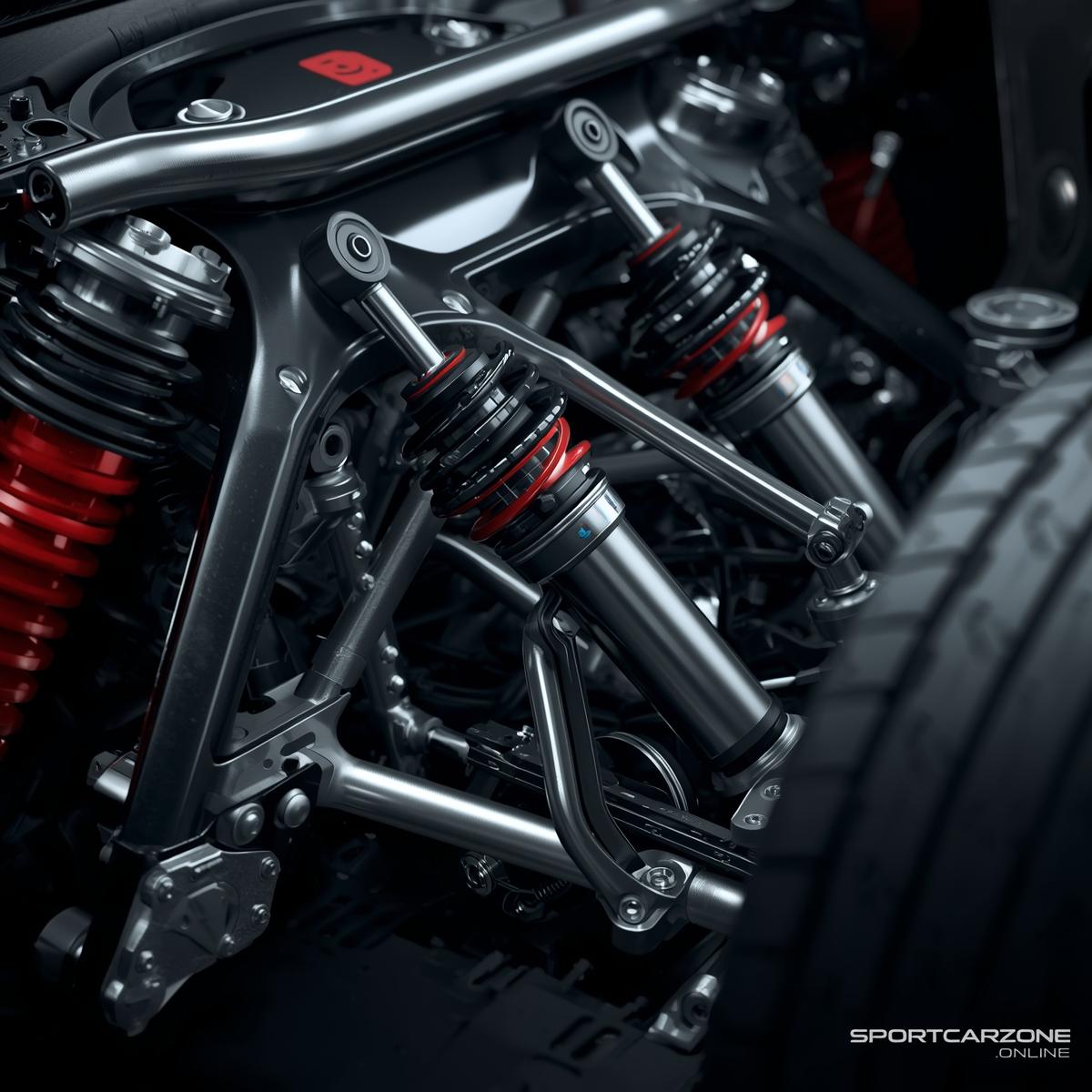
Suspension systems play a critical role in sports car performance. They connect the wheels to the chassis, manage weight transfer, and influence handling, braking, and ride comfort. This article explains suspension types, components, and their impact on sports car driving dynamics. Understanding suspension systems helps drivers and enthusiasts evaluate performance and vehicle behavior.
Purpose of Suspension in Sports Cars
Suspension systems serve multiple functions:
Maintain tire contact with the road
Absorb road irregularities
Control vehicle weight transfer during acceleration, braking, and cornering
Support handling balance and driver control
Proper suspension design ensures predictable vehicle response and stability.
Key Components of a Suspension System
Springs
Springs support vehicle weight and absorb vertical motion. Types include:
Coil springs: standard in most sports cars
Leaf springs: rare in modern sports cars, mostly in older models
Torsion bars: used in specialized applications
Spring stiffness affects ride height, handling, and responsiveness.
Shock Absorbers (Dampers)
Dampers control the motion of springs. Functions:
Reduce oscillation after bumps
Control body roll and pitch
Work with springs to maintain tire contact
Dampers may be adjustable in performance vehicles to tune handling characteristics.
Anti-Roll Bars
Anti-roll bars connect opposite wheels to resist body roll:
Reduce lean during cornering
Maintain contact patches for consistent traction
Adjustable bars allow tuning of front-to-rear balance
Control Arms
Control arms position wheels and allow controlled movement:
Upper and lower arms guide wheel path
Maintain camber and toe angles during suspension travel
Commonly found in double-wishbone or multi-link suspensions
Types of Suspension Systems in Sports Cars
MacPherson Strut
Combines shock absorber and coil spring
Simple and lightweight
Common in front suspensions for road-focused sports cars
Double-Wishbone
Two control arms per wheel
Maintains camber through suspension travel
Provides consistent handling under load
Often used in mid- and high-performance sports cars
Multi-Link
Multiple arms per wheel for precise wheel control
Allows tuning of geometry for handling and ride comfort
Common in rear suspensions of modern sports cars
Pushrod and Pullrod
Link suspension movement to inboard spring and damper
Used in racing and high-performance sports cars
Reduces unsprung weight and improves aerodynamics
Suspension Geometry
Camber
Wheel tilt toward or away from the vehicle center
Negative camber improves cornering grip
Excessive camber can reduce straight-line traction
Caster
Steering pivot angle along vertical axis
Affects straight-line stability and steering feel
Toe
Angle of wheels pointing inward or outward
Influences turn-in response and tire wear
Suspension geometry defines handling balance and responsiveness.
Adaptive and Active Suspension Systems
Modern sports cars may include:
Adaptive dampers: adjust stiffness based on speed, cornering, and road conditions
Active roll control: electronically controls anti-roll bars to reduce body roll
Air suspension: adjusts ride height and stiffness dynamically
These systems enhance handling without sacrificing daily usability.
Weight Transfer and Suspension
During driving maneuvers:
Acceleration shifts weight to rear wheels
Braking shifts weight to front wheels
Cornering shifts weight to the outside wheels
Suspension design manages these forces to maintain tire contact and predictable handling.
Role of Suspension in Braking
Suspension geometry affects braking stability
Anti-dive geometry reduces nose dive under heavy braking
Load distribution across tires determines maximum braking force
Suspension tuning ensures sports cars remain stable under extreme deceleration.
Tires and Suspension Interaction
Suspension maintains tire contact patches
Tire characteristics influence suspension setup
Proper matching of tire and suspension improves cornering and traction
Designers consider both tire and suspension characteristics for optimal performance.
Suspension and Ride Comfort
While sports cars prioritize handling, suspension also affects ride comfort:
Stiffer springs improve cornering response but transmit road vibrations
Adjustable systems allow compromise between comfort and performance
Ride height adjustments can prevent scraping or improve aerodynamics
Suspension balance determines usability on streets versus track conditions.
Common Misconceptions
Stiffer suspension always improves performance – balance and geometry matter
Active systems eliminate driver skill requirements – setup still affects behavior
More travel is always better – excessive travel can reduce handling precision
Understanding these points helps buyers and enthusiasts evaluate performance properly.
Testing and Development
Sports car suspension systems are tested using:
Track testing to evaluate handling response
Data logging for suspension travel, wheel load, and body roll
Simulations and CAD analysis to optimize geometry
Iterative testing ensures suspension systems deliver predictable and safe performance.
SEO Key Takeaways
Search engines classify sports car suspension content based on:
Suspension types: MacPherson, double-wishbone, multi-link, pushrod/pullrod
Components: springs, dampers, control arms, anti-roll bars
Geometry: camber, caster, toe
Adaptive and active systems
Role in handling, braking, and ride comfort
These categories improve search visibility for technical and performance-focused queries.
Conclusion
Suspension systems define sports car performance. Components like springs, dampers, anti-roll bars, and control arms work together to manage weight transfer, handling, and stability. Geometry, adaptive systems, and tire interaction further influence driving dynamics. Understanding suspension systems helps drivers, enthusiasts, and buyers evaluate sports car behavior and make informed choices about performance and handling.