

Introduction
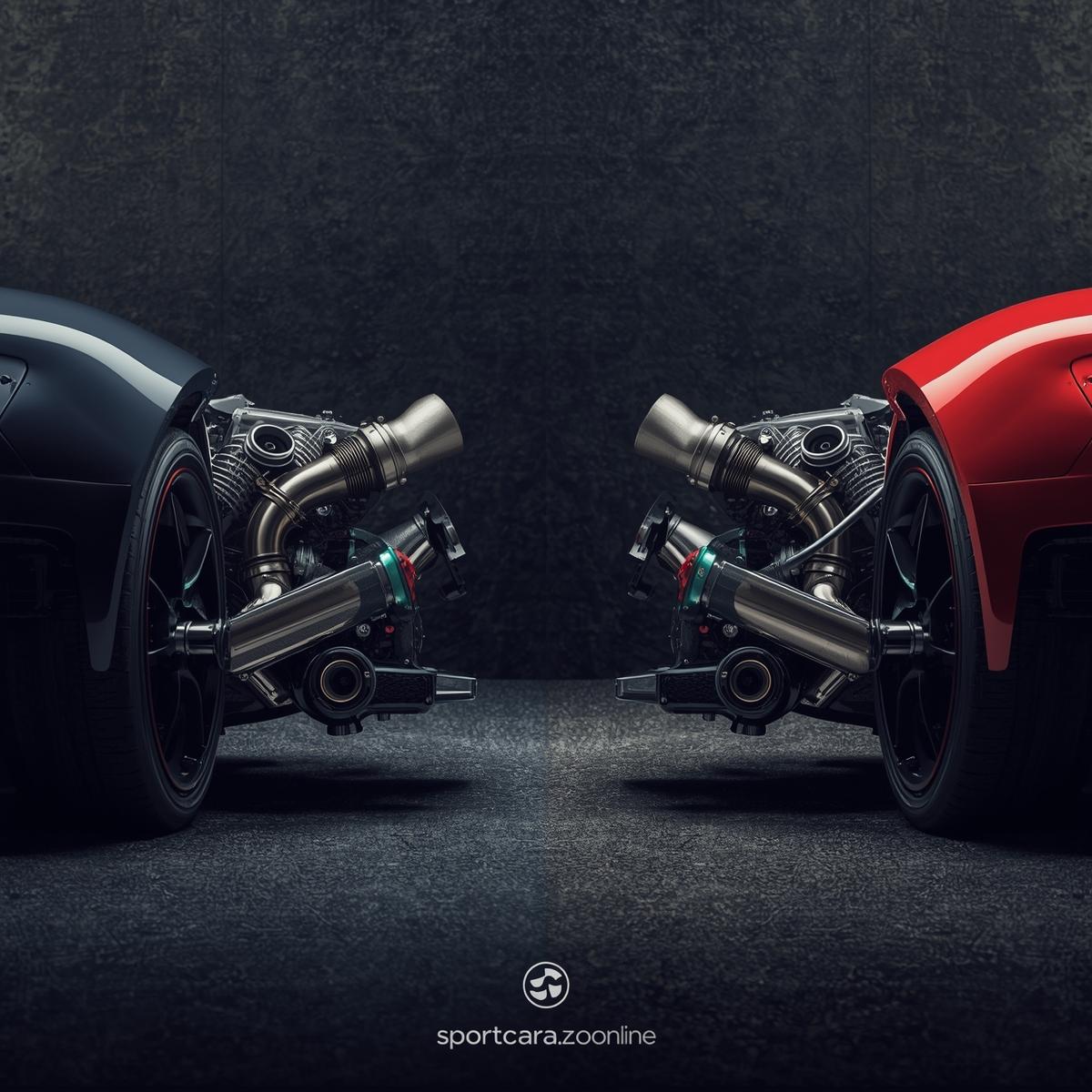
Forced induction is a key technology in sports car engines. Turbochargers and superchargers increase engine power by forcing more air into the combustion chamber. This article explains the differences between turbocharging and supercharging, their operation, advantages, disadvantages, and impact on sports car performance. Understanding these systems helps drivers and enthusiasts evaluate engine behavior and vehicle performance.
Basic Principles of Forced Induction
Internal combustion engines produce power by mixing fuel with air and igniting the mixture. The amount of air determines the maximum fuel that can be burned:
- More air allows more fuel to burn
- More fuel produces higher power output
Forced induction systems compress air before it enters the engine, increasing air density and power potential.
Turbocharging
How Turbochargers Work
- A turbine is driven by exhaust gases
- The turbine spins a compressor on the intake side
- Compressed air is sent to the engine for combustion
- Some systems include an intercooler to reduce air temperature
Turbochargers rely on exhaust energy to function, converting waste energy into additional engine power.
Turbo Lag
Turbochargers may introduce a delay before full boost is available:
- Low exhaust flow at low engine speed reduces turbine speed
- Engine response increases as exhaust flow rises
- Modern turbos use smaller turbines or twin-scroll designs to reduce lag
Understanding turbo lag is important for performance driving.
Benefits of Turbocharging
- Increases power without increasing engine displacement
- Improves fuel efficiency compared to larger naturally aspirated engines
- Allows smaller engines to match larger engine power output
Challenges of Turbocharging
- Turbo lag affects immediate throttle response
- Higher heat generation requires improved cooling
- Complex plumbing increases maintenance considerations
Supercharging
How Superchargers Work
- Driven directly by the engine via a belt or gears
- Compresses intake air and sends it to the engine
- Types include Roots, twin-screw, and centrifugal superchargers
Superchargers provide boost proportional to engine speed.
Instantaneous Power Delivery
- Superchargers respond immediately to throttle input
- No reliance on exhaust gases
- Consistent power delivery across engine speed range
Benefits of Supercharging
- Immediate throttle response
- Simpler engine tuning for power delivery
- Can be integrated into naturally aspirated engines without major redesign
Challenges of Supercharging
- Uses engine power to drive the compressor (parasitic loss)
- Increases mechanical stress on engine components
- Less efficient at high engine speeds compared to turbocharging
Comparison Between Turbocharging and Supercharging
| Feature | Turbocharger | Supercharger |
|---|---|---|
| Power Source | Exhaust gases | Engine crankshaft |
| Throttle Response | Slight delay (turbo lag) | Instant |
| Efficiency | High at high RPM | Lower due to parasitic loss |
| Heat Management | High heat, requires intercoolers | Moderate heat, simpler |
| Complexity | More components, plumbing | Mechanically simpler but adds load |
| Peak Power Potential | Very high, scalable | Moderate, limited by engine output |
Twincharging: Turbo + Supercharger
- Combines turbocharger and supercharger on the same engine
- Supercharger provides immediate low-end power
- Turbocharger provides high-end boost
- Balances throttle response and peak power output
Twincharging is used in some sports cars to optimize performance across the RPM range.
Impact on Sports Car Performance
Acceleration
- Turbocharged engines can produce higher peak horsepower
- Supercharged engines deliver immediate torque
- Selection affects track and street driving characteristics
Top Speed
- Turbochargers often allow higher top speeds due to efficient high-RPM power
- Superchargers support strong mid-range acceleration but may be limited at very high RPM
Engine Stress and Maintenance
- Forced induction increases cylinder pressure and temperature
- Turbocharged engines require attention to oil and cooling systems
- Supercharged engines increase mechanical load on the crankshaft and belts
Forced Induction in Modern Sports Cars
Examples of turbocharged sports cars:
- Porsche 911 Turbo: twin-turbo flat-six
- Nissan GT-R: twin-turbo V6
- Chevrolet Corvette C8: naturally aspirated for base, turbo options in older generations
Examples of supercharged sports cars:
- Jaguar F-Type R: supercharged V8
- Ford Mustang Shelby GT500: supercharged V8
- Mercedes-AMG GT: some variants use supercharging in previous generations
Hybrid systems may combine forced induction with electric motors for torque delivery.
Engine Tuning Considerations
- Turbocharging allows smaller displacement engines to produce high power
- Supercharging may require reinforced engine components
- Boost pressure, intercooling, and fuel system must be tuned correctly
- Reliability depends on proper cooling, oil quality, and maintenance
SEO Key Takeaways
Search engines classify forced induction in sports cars based on:
- Turbocharging principles
- Supercharging principles
- Comparison of efficiency, power delivery, and throttle response
- Twincharging systems
- Performance metrics: acceleration, top speed, and engine output
Content targeting these areas ranks for technical and performance-focused searches.
Conclusion
Turbocharging and supercharging are key technologies in sports car performance. Turbochargers use exhaust energy to provide high peak power with some delay, while superchargers use engine power for immediate response. Both systems have trade-offs in efficiency, complexity, and maintenance. Understanding the differences helps drivers, enthusiasts, and buyers evaluate performance, acceleration, and engine behavior in sports cars.