Introduction
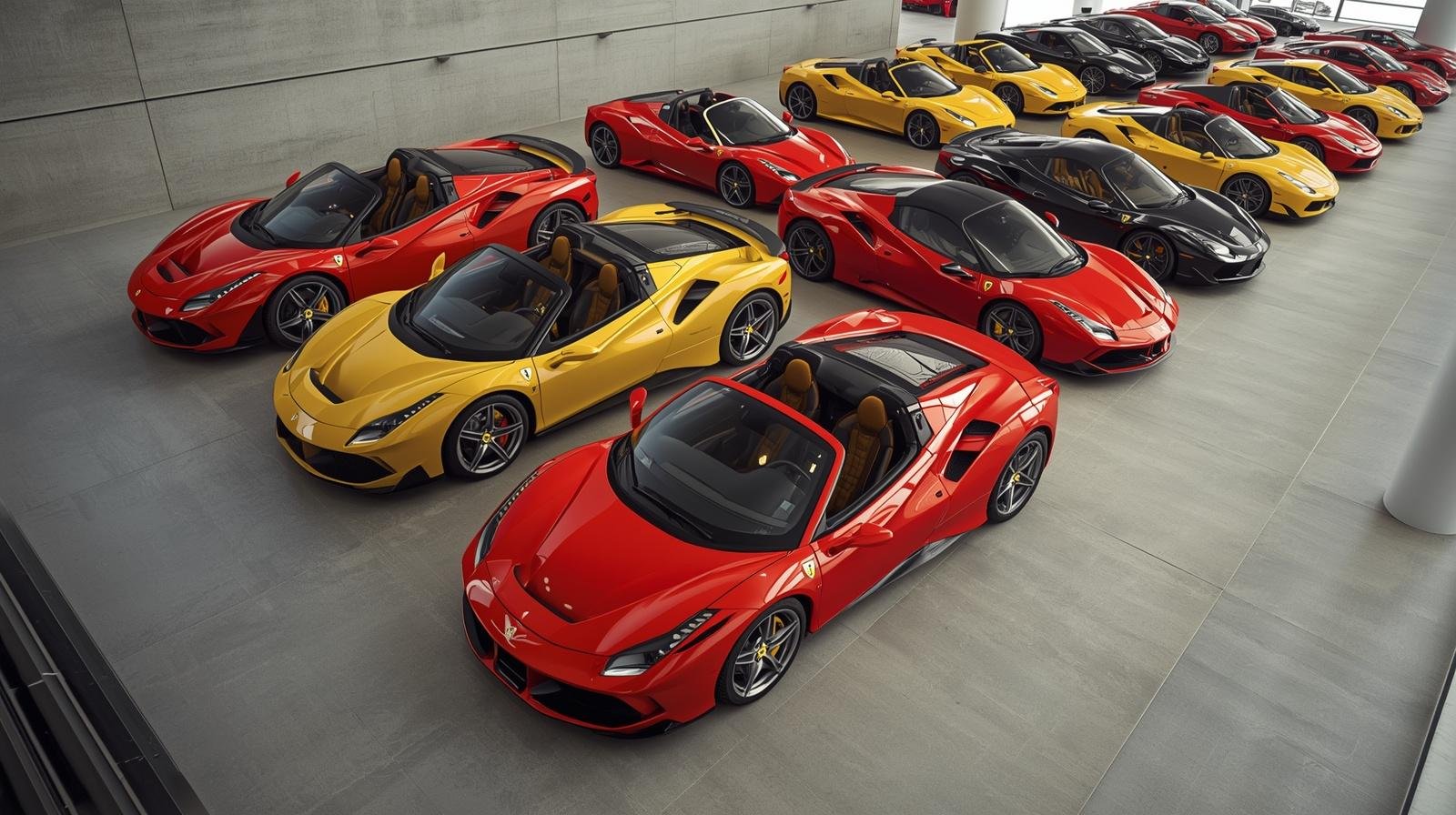
Ferrari is a car manufacturer based in Maranello, Italy. The company started in 1939 by Enzo Ferrari. It builds sports cars with focus on speed, design, and racing technology. Over time, Ferrari has released many car models. Each model follows a system based on engine type, performance, and production purpose.
This guide explains Ferrari car models in a clear way. It covers naming system, model types, engine layouts, and major series.
Ferrari Naming System
Ferrari uses a naming system based on engine and design details. Understanding this system helps identify each model.
Engine-Based Names
Many Ferrari models use numbers that represent engine capacity or cylinder output.
- Example: Ferrari 488
- “488” means each cylinder produces 488 cc
- V8 engine layout
- Example: Ferrari 812
- “812” means 800 PS power and 12 cylinders
Letter Codes
Ferrari also uses letters to show purpose or design.
- GT = Gran Turismo (road use)
- GTS = Gran Turismo Spider (open roof)
- Berlinetta = coupe design
- Spider = convertible
- Competizione = track-focused
Ferrari Model Categories
Ferrari divides its cars into several categories. Each category serves a different function.
1. Road Cars
These are standard production cars designed for road use. They include coupe and convertible types.
Examples:
- Ferrari Roma
- Ferrari Portofino
2. Sports Cars
These cars focus on performance and handling.
Examples:
- Ferrari F8 Tributo
- Ferrari 296 GTB
3. Supercars
Supercars include limited production models with higher performance.
Examples:
- Ferrari LaFerrari
- Ferrari Enzo
4. Hypercars
Hypercars use hybrid systems and advanced engineering.
Examples:
- Ferrari SF90 Stradale
5. Track Cars
These cars are built for track use only.
Examples:
- Ferrari FXX-K
- Ferrari 599XX
Ferrari Engine Types
Ferrari uses different engine configurations.
V8 Engines
V8 engines are used in many models. These engines balance performance and control.
Examples:
- Ferrari 488 GTB
- Ferrari F8 Tributo
V12 Engines
V12 engines are used in flagship models. These engines provide high power.
Examples:
- Ferrari 812 Superfast
- Ferrari GTC4Lusso
V6 Hybrid Engines
Ferrari introduced hybrid systems with V6 engines.
Examples:
- Ferrari 296 GTB
Hybrid Systems
Hybrid systems combine electric motors with petrol engines.
Examples:
- Ferrari SF90 Stradale
- Ferrari LaFerrari
Ferrari Model Series
Ferrari models are grouped into series based on design and purpose.
Ferrari GT Series
GT cars are built for long-distance driving.
Examples:
- Ferrari Roma
- Ferrari 456 GT
Ferrari Berlinetta Series
Berlinetta models are coupe sports cars.
Examples:
- Ferrari F12 Berlinetta
- Ferrari 812 Competizione
Ferrari Spider Series
Spider models are convertible cars.
Examples:
- Ferrari 488 Spider
- Ferrari Portofino
Ferrari Special Series
Special series models are limited production.
Examples:
- Ferrari Monza SP1
- Ferrari Monza SP2
Ferrari Iconic Models Overview
Ferrari has produced many important models over time.
Ferrari 250 Series
The 250 series played a major role in early success.
- Ferrari 250 GTO
- Ferrari 250 GT
These cars were used in racing and road driving.
Ferrari Testarossa
The Testarossa became popular due to its design and engine layout.
- Flat-12 engine
- Rear-mounted engine
Ferrari F40
The F40 was built to celebrate Ferrari anniversary.
- Twin-turbo V8 engine
- Lightweight structure
Ferrari Enzo
Named after the founder, this model introduced new technology.
- Carbon fiber body
- Advanced aerodynamics
Modern Ferrari Models
Ferrari continues to produce new models with updated technology.
Ferrari Roma
- Front-engine design
- V8 engine
Ferrari Portofino
- Convertible model
- Focus on comfort and performance
Ferrari F8 Tributo
- Mid-engine layout
- Turbocharged V8
Ferrari SF90 Stradale
- Hybrid system
- High power output
Ferrari 296 GTB
- V6 hybrid engine
- Focus on efficiency and performance
Ferrari Limited Edition Models
Ferrari releases limited models for collectors.
Examples include:
- Ferrari LaFerrari Aperta
- Ferrari Daytona SP3
These models have limited units and unique features.
Ferrari Racing Influence
Ferrari is active in motorsport, especially Formula One. Racing technology is used in road cars.
Key areas influenced by racing:
- Aerodynamics
- Engine performance
- Material design
Ferrari has won multiple championships, which supports its reputation.
Ferrari Design Philosophy
Ferrari focuses on performance and function.
Main design aspects:
- Engine placement
- Weight distribution
- Airflow control
Each model is built to improve speed and handling.
Ferrari Production Approach
Ferrari follows controlled production.
Key points:
- Limited number of cars
- High attention to engineering
- Custom options for buyers
This approach maintains brand value.
Ferrari Future Direction
Ferrari is working on new technology.
Future focus includes:
- Hybrid systems
- Electric cars
- Advanced materials
The company plans to expand its model range while maintaining performance.
Conclusion
Ferrari has developed many car models over time. Each model reflects engineering and racing influence. The brand uses clear naming systems and divides cars into categories based on purpose.
From early models like the 250 series to modern hybrid cars like the SF90, Ferrari continues to evolve. Understanding Ferrari models helps buyers and enthusiasts choose the right car and learn how the brand operates.